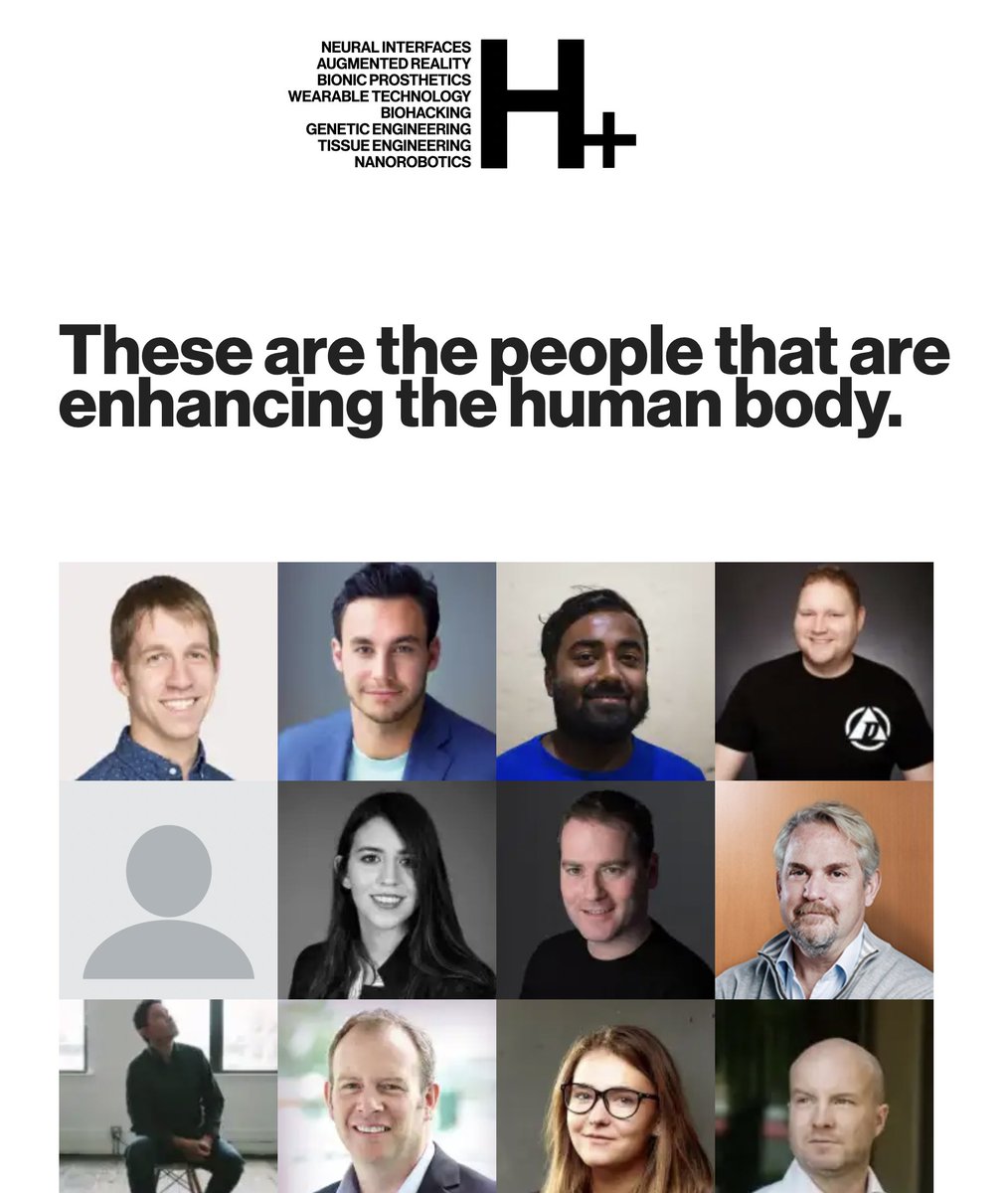
15/ There’s a growing number of researchers and entrepreneurs that is dedicating a significant part of their lives to achieve impossible goals (like restoring vision). These are the people that are moving humankind forward.
13/ Looking back at the market evolution since I started H+, it becomes obvious how hard HW and biotech startups are. Especially the ones that are inventing the future of human life. There’s very little perceivable progress made in 4 years.
12/ The industry efforts to augment the human body are overwhelmingly originating in the United States. It might be a distortion due to the fact that US startups are more covered by the press and more documented in their activities. https://t.co/4x1WBCOSiX
11/ The Vitruvian Man map shows underdeveloped areas where new startups could emerge. But keep in mind that, despite almost 100 industry players in the databases, there are many companies H+ doesn’t track yet. https://t.co/0Npf2VohUy
10/ Perhaps unsurprisingly, more than any other field covered by H+, the biggest Tech companies are all investing in augmented reality while the biggest Pharma companies are all investing in genetic engineering.
9/ Over 400 investment firms have funded the startup tracked by H+. Few of them have invested in both tech and healthcare startups. Among venture capital firms, the most active are @GV and @khoslaventures. Among the investment banks, the most active is @Fidelity.
8/ But while tech companies are now focusing on around-the-body devices that have broader applicability than pure healthcare, they also infiltrate the in-the-body category (initially in the form of monitoring devices).
7/ H+ segments the human body augmentation market opportunity in 2 categories: around the body and inside the body. Healthcare companies used to dominate both. Now technology companies have started to infiltrate the former category.